Cart
0
You may also like



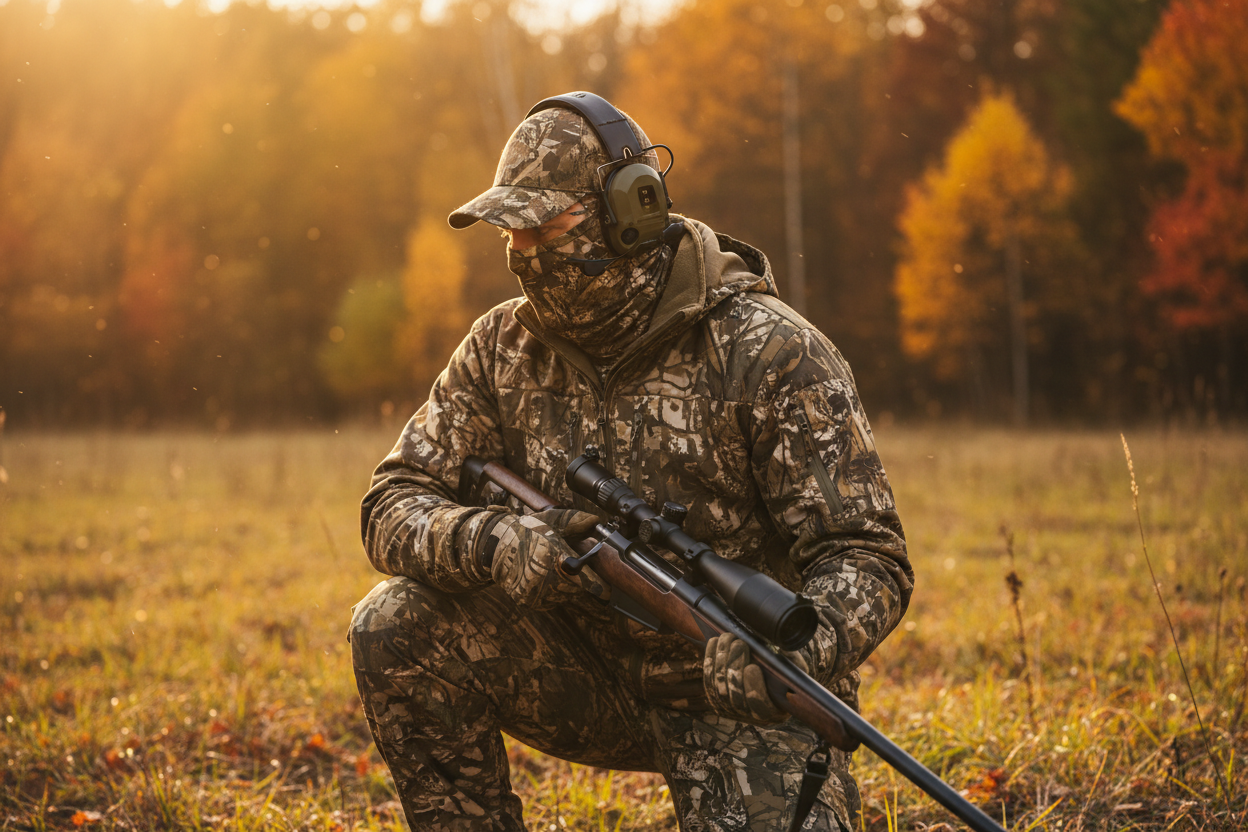
Hunting season represents peak opportunity for outdoor enthusiasts—yet many hunters unknowingly compromise hearing health through inadequate ear protection decisions. A single rifle discharge produces 140-160+ decibels of noise, approximately equivalent to a jet engine at takeoff. Long-term exposure to sound above 85 decibels causes permanent, irreversible hearing loss. Over a hunting lifetime, this damage accumulates progressively, transforming preventable hearing impairment into permanent disability.
The challenge hunters face: traditional passive ear protection blocks all sound indiscriminately, eliminating the very environmental awareness upon which field safety depends. Modern electronic ear protection solves this paradox through advanced microphone and digital processor technology, allowing hunters to hear conversations, game movement, and critical safety cues while automatically suppressing dangerous gunshot noise. This comprehensive guide explores hearing protection options, explains how electronic technology works, and guides hunters toward field-proven solutions maximizing both safety and functionality.
The physics are unforgiving: rifle gunshots produce 140-160+ decibels of instantaneous noise—far exceeding the 85-decibel threshold above which hearing damage becomes inevitable. A single unprotected hunting season exposes ears to cumulative damage equivalent to working in a jet engine factory.
Hearing loss progresses invisibly. Damage accumulates long before hunters notice functional hearing loss, and by that point, the damage is permanent and irreversible. The Noise Reduction Rating (NRR), measured in decibels (dB), quantifies how effectively protection reduces noise levels. Understanding NRR prevents dangerous underestimation of protection needs.
Traditional passive earmuffs and earplugs create physical barriers blocking all sounds indiscriminately. While this approach delivers consistent 25-34 dB NRR protection, it simultaneously eliminates environmental awareness critical for hunting success and safety.
Hunters cannot:
This sensory deprivation paradoxically increases hunting risks—compromised awareness creates dangerous situations competing with hearing protection benefits.
Electronic ear protection represents a technological breakthrough solving the passive protection paradox. Rather than blocking all sound, electronic systems use microphones and digital processors to differentiate between harmful gunshot noise and safe-level environmental sounds.
Modern electronic systems operate through sound-activated compression with reaction times near 0.02 seconds. This instantaneous response works as follows:
During quiet periods: Microphones capture and amplify ambient sounds—conversations, game movement, background noise—up to 40 dB amplification for low-volume inputs. Hunters hear normally, without sensory deprivation.
During gunshots: Microphones detect sudden loud noise and instantly shut down the amplification circuit, compressing the dangerous sound to safe levels. The protective effect is immediate, preserving hearing.
This technological sophistication enables hunters to maintain complete environmental awareness while obtaining equivalent or superior protection to passive alternatives.
Unlike range shooters who need protection during firing and can remove protection between rounds, hunters face unpredictable shooting moments. Removing and reapplying protection continuously creates opportunities for unprotected gunshots—exactly when hearing damage occurs.
Electronic systems remain effective continuously without removal, ensuring protection during unexpected opportunities. This continuous protection, combined with maintained situational awareness, represents the ideal hunting ear protection strategy.
Passive systems include traditional earmuffs and foam earplugs offering 25-34 dB NRR depending on design. Advantages include simplicity, reliability, no batteries required, and typically lower cost.
However, passive protection's indiscriminate sound blocking makes field hunting problematic. Hunters cannot hear approaching game, hunting companions' voices, or environmental cues necessary for ethical, safe hunting.
Passive protection works well for solo range shooting, where complete sound isolation is desired. For hunting? Electronic alternatives prove functionally superior.
Electronic systems typically offer 22-27 dB NRR—slightly lower than the best passive options but with game-changing situational awareness capabilities. Modern electronics feature extended battery life (25-600 hours depending on model), selective gain controls per ear, dual omnidirectional microphones, and—in some models—Bluetooth connectivity.
For hunting specifically, electronic protection enables:
Electronic earmuffs like the AXIL TRACKR (27 dB SNR) or Peltor Tactical 500 (26 dB NRR) offer robust protection with full ear coverage. They're excellent for range work and outdoor stationary shooting.
However, earmuffs contact rifle stocks when shouldering—creating dead-zone audio gaps and potential equipment issues. For hunters frequently shouldering rifles, this represents a functional limitation.
Electronic earbuds and in-ear plugs solve the rifle-stock problem entirely. Models like AXIL GS Extreme 2.0 or specialty electronic plugs deliver low-profile protection without interfering with proper shooting form.
Advantages for hunters:
Many experienced hunters adopt this strategy: electronic earbuds as primary protection, with electronic earmuffs as backup for stationary shooting sessions.
For hunters using large-caliber rifles (producing 160+ dB noise), doubling protection proves worthwhile. The formula: Plug NRR + Muff NRR = Total protection (not directly additive).
Example: Electronic in-ear plugs (25 dB) + electronic earmuffs (26 dB) ≈ 35 dB total protection—exceeding the recommended 30 dB minimum.
Doubling strategy benefits:
Emblem Outdoor's philosophy centers on equipment proven in actual field conditions—not laboratory benchmarks divorced from reality. Our electronic and passive shooting ear protection collection reflects this commitment.
Whether you choose our electronic earmuffs for range versatility or specialized in-ear protection for hunting mobility, each product undergoes field testing ensuring functionality when it matters most. We understand that hearing protection cannot compromise field awareness—the core mission of our complete ear protection lineup.
Explore Emblem Outdoor's hunting-focused ear protection collection and discover solutions engineered specifically for hunters refusing to compromise between safety and field functionality.
Q: What NRR rating is sufficient for hunting?
A: Minimum 25 dB NRR for outdoor hunting with standard rifles. Large-caliber rifles benefit from 30+ dB NRR, achieved through doubling protection.
Q: Will electronic ear protection cost significantly more than passive?
A: Yes, but consider the value: maintained situational awareness enables better hunting success and safety compliance. Many hunters view electronic as essential, not premium.
Q: How long do electronic ear protection batteries last?
A: Depends on model: AAA batteries offer 20-50 hours; proprietary batteries support 600+ hours; rechargeable batteries typically deliver 50-100 hours. Check manufacturer specifications.
Q: Can I use electronic muffs while hunting if the rifle stock contacts them?
A: Possible, but uncomfortable and creates audio dead zones. In-ear electronic solutions solve this problem entirely.
Q: Is doubling protection necessary for typical hunting?
A: For standard rifle hunting outdoors, no. For large-caliber rifles or indoor range use, doubling provides maximum safety margin.
Q: Do electronic systems work immediately when powered on?
A: Yes. Modern electronics activate instantly with 0.02-second reaction time to loud noise. No warm-up required.
Hearing protection represents non-negotiable hunting season preparation—permanent hearing loss requires prevention, not treatment. Modern electronic ear protection technology eliminates the false choice between safety and field awareness: hunters can maintain complete situational awareness while obtaining superior hearing protection compared to outdated passive alternatives.
Invest in quality electronic shooting ear protection engineered specifically for field hunting rather than settling for range-designed solutions. Emblem Outdoor's ear protection collection delivers durability, functionality, and field-tested performance—protecting your hearing throughout a lifetime of hunting seasons.
Prepare properly. Protect permanently. Hunt confidently knowing your hearing—and your awareness—remain intact throughout your hunting career.

