Cart
0
You may also like



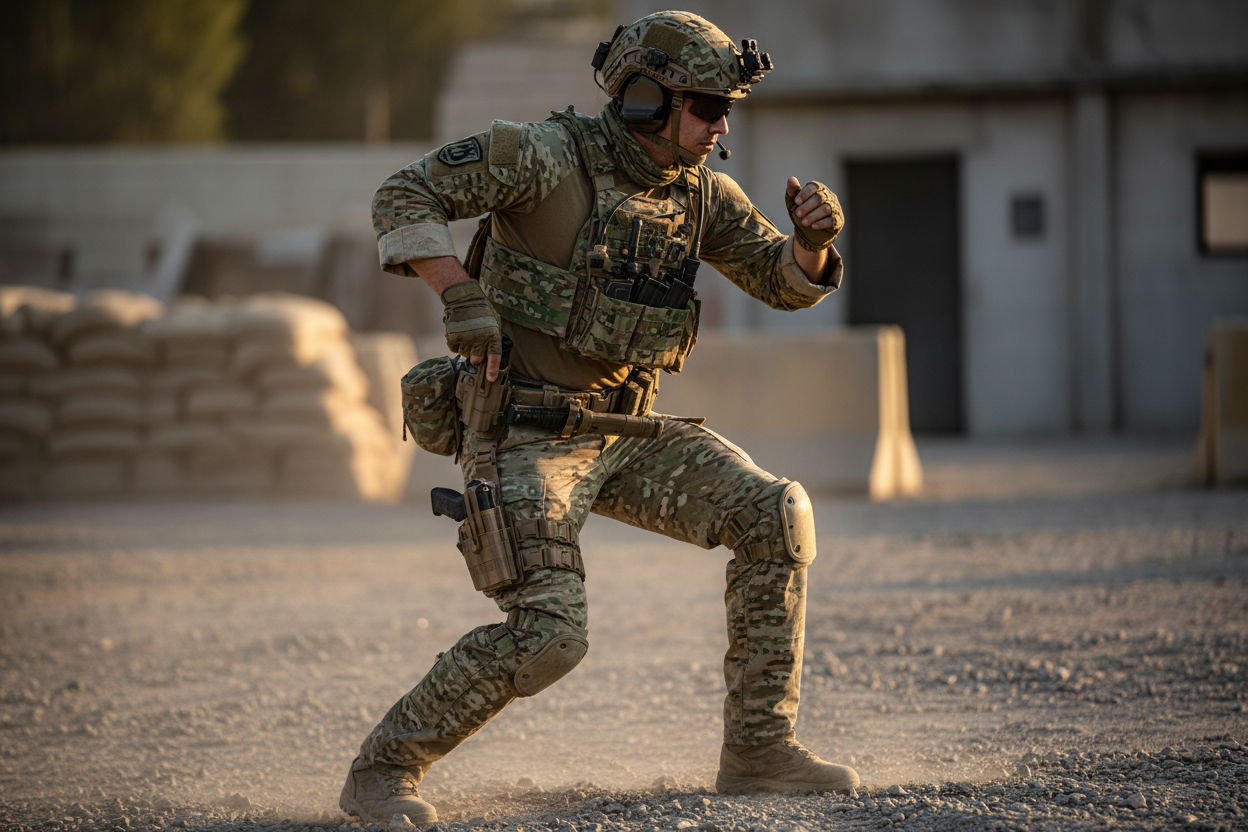
A properly set up battle belt is more than a way to carry gear — it’s a training tool. When configured and practiced with intentionally-designed movement drills, a battle belt teaches muscle memory, improves transitions under stress, and reduces fumbling during reloads or equipment changes. This guide explains how to build a practical battle belt setup, how to position pouches for retention and speed, and — most importantly — which movement drills deliver measurable training carryover. Links to product options and the battle-belt collection are included for easy shopping: visit the Emblem Outdoor homepage and browse the battle belt collection to match the kit you’ll train with.
Carrying weight around and doing random runs won’t reliably translate to better gear-handling. Retention — the ability to keep equipment secure while moving, transitioning, and manipulating it — is a skill set. Retention improves fastest when training is deliberate: short, high-repetition drills with immediate feedback. These drills teach you where to instinctively place your hand, how to move while clearing pouches, and how to manipulate rigging without looking.
Before you drill, get the belt right.
1. Fit tight, not restrictive. A battle belt should sit snug on the hips so pouches ride steadily during movement. If the belt slides around, every drill will reinforce bad habits.
2. Distribute weight evenly. Use a central platform (dump pouch or admin) to avoid torque. Heavy items like radios or hydration should be placed toward the rear center to prevent front-heavy tipping.
3. Modular placement by function. Follow a consistent layout: dominant-side primary mag pouches, support-side medic or multi-tool, rear-center dump, and weak-side utility or radio. Consistency builds retention — you always know where your hand will find gear.
4. Low-profile retention solutions. Use adjustable retention straps, elastic inserts, or friction pouches. These reduce accidental loss during rolls, slides, or sprinting.
Set up your belt and walk through these points slowly before doing any dynamic work. When your rig feels balanced during a slow jog, you’re ready for drills.
Below are progressive drills designed for measurable gains. Use light loads to start; increase weight and intensity as technique solidifies.
Purpose: build tactile memory.
Method: Put on the belt and, standing still, practice indexing every pouch 20x — draw mag, return mag, open admin pouch, tap radio, etc. Eyes closed for half the reps. This aligns proprioception with pouch location.
Purpose: reinforce draws while moving.
Method: Walk 30 meters, draw magazine at marker, make a controlled re-holster and continue. Repeat for 6–8 laps. Focus on smooth transitions and re-seating the equipment by feel.
Purpose: combine speed with retention.
Method: Jog a 40m course with cones. At each cone, perform a specific action (mag swap, administer simulated aid into a medic pouch, drop a magazine into the dump pouch). Keep tempo steady; accuracy beats raw speed. Use a timer and track improvement.
Purpose: test retention under real movement.
Method: Perform low crawls, shoulder rolls, and quick kneel-to-stand transitions while wearing the loaded belt. After each movement, immediately index your dominant mag and confirm it’s secure. This teaches how to protect equipment during dynamic body mechanics.
Purpose: simulate stress and fine motor work.
Method: Do a 60–90 second high-intensity interval (sprints, burpees), then immediately perform a slow, precise task (reloads, tourniquet application) while breathing down. Repeat sets and track time-to-complete. This drill trains coordination when heart rate is high.
Use measurable metrics: time to complete drill sequences, number of retention failures (dropped items), and accuracy of simulated tasks. Video your sessions to catch inefficient hand paths or belt movement. Small, consistent improvements in time and reductions in failures indicate effective retention training.
If you’re ready to train, pick a battle belt that allows fast modular changes and has robust retention options. Emblem Outdoor’s battle-belt collection features options for different torso sizes, modular pouch configurations, and reinforced inner belts for stability. Browse the collection and compare layouts to match your training plan. For product specs and new arrivals, check the Emblem Outdoor homepage. Train with the same belt you plan to deploy — equipment familiarity matters.
Q: How heavy should my battle belt be for training?
A: Start light — 2–4 lbs for initial drills. Gradually add weight as retention improves, but keep total weight within a comfortable range for repeated reps.
Q: Should I include a harness or suspenders?
A: If you’ll carry heavy loads for long periods, suspenders reduce belt sag and hip strain. For short training drills, a properly fitted inner belt is usually sufficient.
Q: How often should I drill to see retention improvements?
A: Short, focused sessions 2–3 times per week produce faster gains than occasional long sessions. Consistency is key.
Q: Can I use these drills with other loadouts (plate carriers)?
A: Yes — many drills scale to other kit. However, start with the belt alone to build baseline retention skills before adding torso gear.
Shop battle belts here!
Retention is a learned skill — and the battle belt is the ideal platform for training it. Use the progressive drills above to build tactile familiarity, improve transitions under stress, and reduce equipment loss or fumbling. Standardize your belt layout, train with intentional short sessions, and gradually increase load as technique improves. When you’re ready to purchase a belt designed for serious training, explore Emblem Outdoor’s battle belt collection and match a configuration to your dominant-side layout and training goals. Train deliberately, measure gains, and your gear-handling will become instinctive.

