Cart
0
You may also like



IMPORTANT DISCLAIMER: This article provides educational information only. This is NOT medical advice. Always consult qualified medical professionals for trauma care decisions. Tourniquet use requires proper training—seek certified instruction from organizations like the American Red Cross or Stop the Bleed before attempting application in emergencies.
Severe bleeding from extremity trauma represents the leading preventable cause of death in combat, accidents, and disaster situations. When direct pressure fails and hemorrhagic shock becomes imminent, tactical mechanical tourniquets (TMTs) bridge the critical gap between injury and professional medical intervention. Military research demonstrates that aggressive tourniquet use reduces preventable bleeding deaths by 50%—translating to an estimated 1,000-2,000 lives saved through prehospital hemorrhage control.
The TMT Tourniquet represents mechanical engineering specifically designed for rapid, effective extremity hemorrhage control during life-threatening emergencies. Understanding real-world application scenarios—from battlefield medicine through civilian trauma to disaster response—clarifies why emergency preparedness professionals increasingly recommend mechanical tourniquets as essential equipment.
Severe extremity bleeding creates unforgiving time constraints. A casualty with massive, uncontrolled limb hemorrhage can lose consciousness within minutes—potentially dying within three minutes without intervention. This narrow window of opportunity between injury and medical professional arrival demands equipment enabling immediate, effective response.
Hemorrhagic shock occurs when blood loss reaches critical volumes, preventing adequate oxygen delivery to vital organs. Once shock develops, survival probability decreases dramatically even with subsequent medical intervention. Preventing shock through rapid hemorrhage control represents the most critical injury intervention available to first responders.
Properly applied tourniquets eliminate blood loss to affected limbs within seconds, preventing shock development and buying precious time for medical evacuation.
Decades of military combat medicine research document tourniquet effectiveness conclusively. The Israeli Defence Force reported zero deaths from uncontrolled limb hemorrhage among 550 injured soldiers over four years with aggressive tourniquet use. The U.S. Air Force Theater Hospital at Balad documented no serious complications despite frequent tourniquet application, even in cases of inappropriate use where no major arterial injury existed.
This evidence suggests that properly applied tourniquets provide reliable hemorrhage control with minimal complication risk.
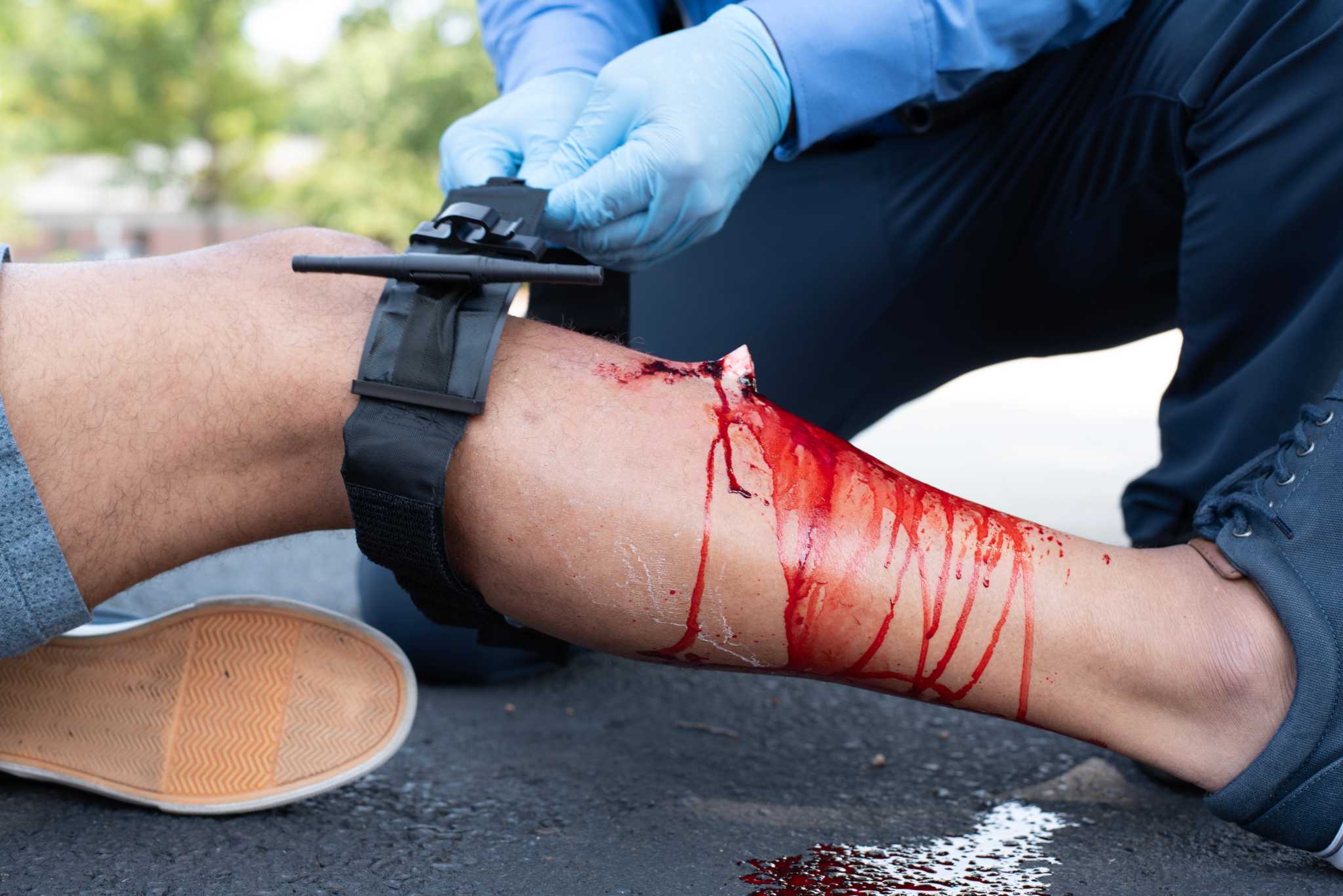
The Tactical Mechanical Tourniquet employs mechanical leverage—a fundamental physics principle converting modest human force into powerful, sustained compression. Unlike strap-based tourniquets requiring careful threading and repositioning, mechanical designs deliver direct, immediate pressure through simple, intuitive operation.
TMT designs utilize screw mechanisms converting rotational input into linear compression force. Users tighten the mechanism until bleeding ceases, with feedback indicating adequate compression. This mechanical simplicity enables rapid application by individuals without extensive medical training.
Research demonstrates TMT achieves complete arterial occlusion (blood flow cessation) in approximately 35 seconds during controlled testing. Under field conditions with stress and urgency, application times remain rapid and effective.
Military and civilian research comparing mechanical and strap-based tourniquets documents comparable effectiveness for hemorrhage control. In controlled studies, TMT achieved 71% successful application while strap-based alternatives achieved 92%. However, both systems achieve adequate pressure (>180 mmHg) required for arterial occlusion.
The practical distinction: mechanical systems appeal to those preferring leverage-based operation, while strap systems suit those comfortable with traditional tourniquet designs.
Combat medics apply tourniquets routinely during firefights where rapid, reliable hemorrhage control becomes critical to survival. Traumatic limb amputations—injuries producing catastrophic bleeding—often require tourniquet application within seconds of injury. Military doctrine now emphasizes tourniquet application as the primary hemorrhage control method during "Care Under Fire" (active combat), precisely because tourniquets enable rapid, definitive bleeding control.
Civilian trauma increasingly requires tourniquet capability. The "Stop the Bleed" initiative, launched nationally in 2015, translates military hemorrhage control techniques to civilian emergency response. First responders now carry tourniquets for:
A 2018 systematic review of civilian trauma cases documented tourniquet effectiveness at 78-100% with complication rates below 2%. These outcomes demonstrate that tourniquets designed for combat medicine translate effectively to civilian emergency settings.
Outdoor adventures in remote locations create scenarios where professional medical help may be hours or days distant. Hiking accidents, climbing injuries, and wilderness incidents produce severe bleeding that tourniquets can stabilize, enabling evacuation before shock develops.
SWAT teams, search and rescue operations, and tactical medical responders increasingly include mechanical tourniquets in operational kits. High-risk operations inherently carry injury potential where immediate hemorrhage control becomes tactically and medically essential.
Earthquakes, floods, industrial disasters, and other catastrophes produce multiple casualties simultaneously with overwhelmed emergency services. In mass casualty scenarios, tourniquets enable rapid triage—stabilizing multiple victims with severe bleeding efficiently, allowing medical personnel to address other injuries.
Emblem Outdoor's TMT Tactical Mechanical Tourniquet represents professional-grade hemorrhage control equipment, engineered specifically for high-stakes emergency environments where equipment reliability becomes absolutely critical.
Unlike consumer-grade alternatives, our TMT tourniquet incorporates mechanical engineering optimized for rapid application, durable construction surviving extreme field conditions, and intuitive operation enabling effective use by trained responders.
Whether integrating into professional emergency medical kits, tactical team equipment, or disaster preparedness supplies, Emblem Outdoor's TMT systems deliver field-tested reliability in genuine emergencies.
Research demonstrates that proper training dramatically improves tourniquet application success: 88% correct application with training versus 16% without. However, only 55% retained correct application skills after 3-9 months, highlighting the critical importance of refresher training.
Organizations like Stop the Bleed, the American Red Cross, and military medical training programs offer certified tourniquet instruction—essential before carrying or deploying tourniquets in emergencies.
Application Principles (Educational Reference Only)
Professional guidelines recommend:
Tourniquet application requires immediate professional medical evaluation and transport to definitive care. Tourniquets are temporary hemorrhage control measures, not permanent solutions. Medical professionals make critical decisions about tourniquet conversion to other hemorrhage control methods or continued application.
Q: Are tourniquets truly safe for untrained civilians?
A: Proper training is essential. Organizations like Stop the Bleed provide certified instruction. Untrained application carries risks—seek certified training before considering emergency use.
Q: Will a tourniquet cause permanent limb damage?
A: Complication rates with properly applied tourniquets remain below 2% in civilian trauma. However, this depends on proper application and rapid medical professional intervention.
Q: How quickly must a tourniquet be applied?
A: Apply within 1 minute to control bleeding; secure fully within 3 minutes. Time-critical situations demand immediate action.
Q: Can a tourniquet ever be left on too long?
A: Yes. Medical professionals attempt tourniquet conversion to other methods within 2 hours if feasible, though some situations warrant continued application. This requires professional medical judgment.
Q: Why choose TMT over other tourniquet types?
A: Mechanical leverage design appeals to those preferring screw-based operation. Both mechanical and strap-based systems achieve comparable effectiveness when properly applied.
Q: Should I carry a tourniquet without training?
A: Not recommended. Training transforms tourniquets from dangerous equipment to lifesaving tools. Seek certified instruction first.
TMT Tourniquets represent genuinely life-saving emergency equipment—not dramatic Hollywood props, but proven, field-tested medical devices with decades of military and civilian research validating their effectiveness. A casualty who would otherwise die from extremity hemorrhage can survive through rapid tourniquet application followed by professional medical intervention.
However, tourniquets demand respect: proper training, understanding application principles, and recognition of their temporary nature as hemorrhage-control bridges to definitive medical care.
Emblem Outdoor's professional-grade TMT Tourniquet delivers mechanical reliability for emergency responders, tactical teams, and prepared individuals. Combined with proper certified training and clear understanding of indications and limitations, mechanical tourniquets provide tangible life-saving capability in genuine emergencies.
Explore Emblem Outdoor's emergency preparedness and tactical equipment collection and invest in tools potentially saving lives when circumstances matter most.

